 |
 Easy Living Home Systems |
 MADE IN U.S.A. |
Form |
Water Conditioners |
Backup Sumps |
Gas Yard Lamps |
|
 Residential
 Customer
| Model |
Description |
Price |
|
|
Gas
Lamp
Mantles
|
|||
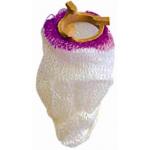 SM-2 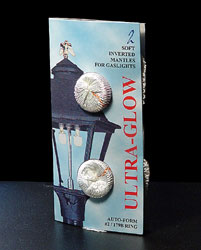 |
Soft Inverted Gas Mantle Pair, 2 per package ( #2 Ceramic Ring, 3/4" ID x 1 1/8" OD ) Each Available:  36 packages $ 306.00 (72 Mantles) Case quantity: 125 packages $ 1,062.50 (250 Mantles) Carton quantity: (4-Cases) 500 packages $ 4,000.00 (1000 Mantles) |
$ 9.50 2-pack $8.50 2-pack $ 8.50 2-pack $ 8.00 2-pack |
|
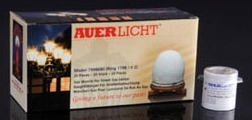 AHM2-1  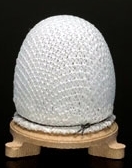 |
AUERLICHT® Same mantles that were made by AUERGESELLSCHAFT in Germany Pre-formed (shaped) Inverted Hard Gas Mantle, 1 per tube. ( #2 Ceramic Ring, 3/4" ID x 1 1/8" OD ) Each Available: 1000 tubed mantles $ 9,500.00 |
$ 11.50 each $ 10.50 each $ 9.50 each |
|
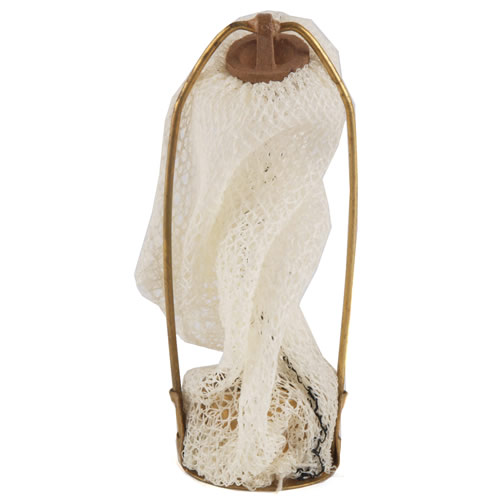 SUM-1 Soft Upright Mantle  N/A - Older UM-1 Model |
Soft Upright Gas Mantles 1 per box Soft Flexible fabric is less brittle than traditional hard style !! ( 4" Height x 1" ID Base ) Each Available: |
$ 12.50 each $ 11.50 each $ 9.50 each |
|
 AHM8-1  |
AUERLICHT® Used for: Humphrey, Falks, Paulin indoor natural and liquid gas lamps. Gas light must be equiped to use pre-formed mantle, not tie on mantle. Pre-formed (shaped) Inverted Hard Mantle, 1 per tube ( #8 Ceramic Ring, 1" ID x 1 1/4" OD ) ( Mantle Height 2" ) Each Available: 48 tubed mantles $ 528.00 |
$ 12.50 each $ 11.50 each $ 11.00 each |
|
680 Lumens per Mantle
1 Mantle = about 50 Watts
60 Candle Power Equal to a 75 Watt bulb
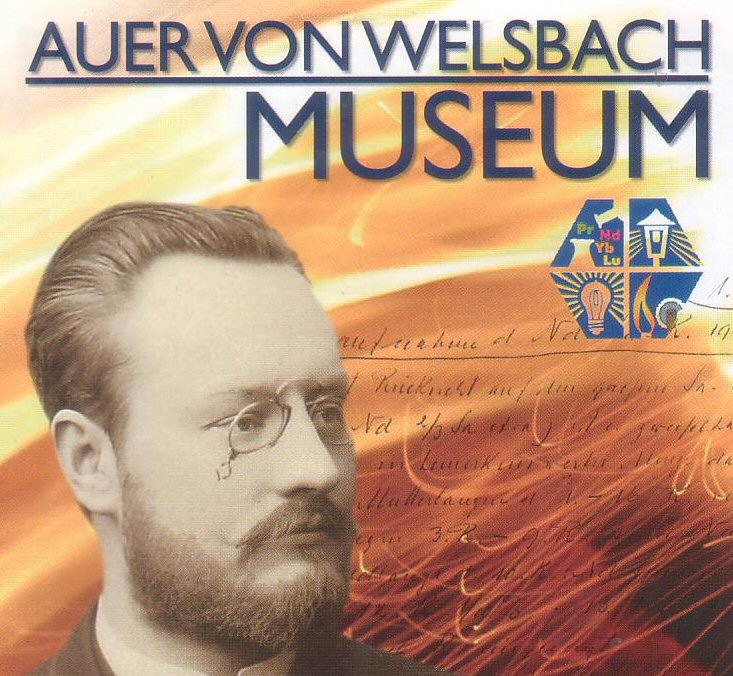
Dr. Carl Auer von Welsbach
1858-1929
|
discovery of the elements Ytterbium and Lutetium. Dr. Carl Auer von Welsbach knew how to use his knowledge of chemistry and metallurgy of rare earth elements most effectively and successfully. He is considered to be the founder of the industrial processing of rare earth elements. One of his most significant achievements in this context is the gas mantle light (1885) which illuminated towns all over the world. Furthermore, the Osmium-bulb, the first metal filament light bulb, replaced the carbon filament bulb, which had been developed by Edison. The invention of the metal filament bulb was of great importance for today`s lighting system. Light bulbs which today are used in every home and for every motor vehicle, are products that originate from Auer von Welsbach`s metal filament bulb. In 1903, Carl Auer von Welsbach invented the lighter flint, also known as "Cereisen, Ferrocerium" or "Auermetall", which nowadays is used daily in lighters by people all over the world. The first useful lighters with Cereisen were also produced by Auer von Welsbach. 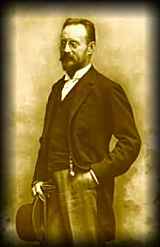 thorium, beryllium, aluminum, or magnesium. The process of making gas mantles originally involved several steps, beginning with the knitting of the cotton/silk fabric. The saturation step the fabric was saturated in lighting fluid. This fluid contains the thorium and cerium salts. The fabric was then dried on wood or glass forms and then carefully plaited together. An asbestos cord was drawn through to form a loop. The fabric was then shaped to fit a mantle by fitting it over a wooden form. It was estimated that American consumers used 40,000,000 mantles per year when gas lighting was commonly used. The
mantle is fixed over an orifice carrying a flammable gas such as
natural gas, coal gas, propane, or vaporized benzene or other fuel.
When the gas is ignited, the mantle fabric burns away, leaving a
brittle residual lattice of metal oxides.
Light is produced when this lattice is heated to glowing by the gas
combustion, although the mantle itself does not burn. Cerium nitrate has been used in the manufacture of incandescent gas mantles. The metal serves as an ingredient in the carbon-impregnated arc lamps that have been used for illumination in the motion-picture, television, and related industries. Cerium is iron gray in color and about as soft and ductile as tin. It oxidizes slowly in air, rapidly reacts with water to yield hydrogen, and burns brilliantly when heated. Dr. Carl Auer von Welsbach was an Austrian chemist and engineer who invented the incandescent gas mantel or "Auerlicht", thus allowing the greatly increased output of light by gas lamps. In 1885 Welsbach discovered and isolated the elements neodymium and praseodymium from a mixture called didymium, which was previously considered an element. His interest in rare-earth elements continued, and he found that a fabric impregnated with a mixture of thorium nitrate and cerium nitrate could be made into a mantle that glowed brightly when heated by a gas flame. Patented in 1885, the Welsbach mantle greatly improved gas lighting and, although largely supplanted by the incandescent lamp, is still widely used in kerosene and other lanterns. In 1898 Welsbach introduced the first metallic filament for incandescent lamps. Although the osmium he used was too rare for general use, his improvement paved the way for the tungsten filament and the modern light bulb. Welsbach also developed misch metal, a mixture of cerium and other rare earths, which he combined with iron to make Auer's metal, the first improvement over flint and steel for making sparks since ancient times. It is used in cigarette lighters and in strikers for lighting gas jets. |
|
MADE IN U.S.A. |
Form |
Water Conditioners |
Backup Sumps |
Gas Yard Lamps |
|
|
Home Systems P.O.
Box
2303 1-815-729-4421 |
Easy Living Home Systems is an Independent Distributor / Dealer of those products. Copyright ©1998-Present, Easy Living Home Systems, All rights reserved. |

|
